
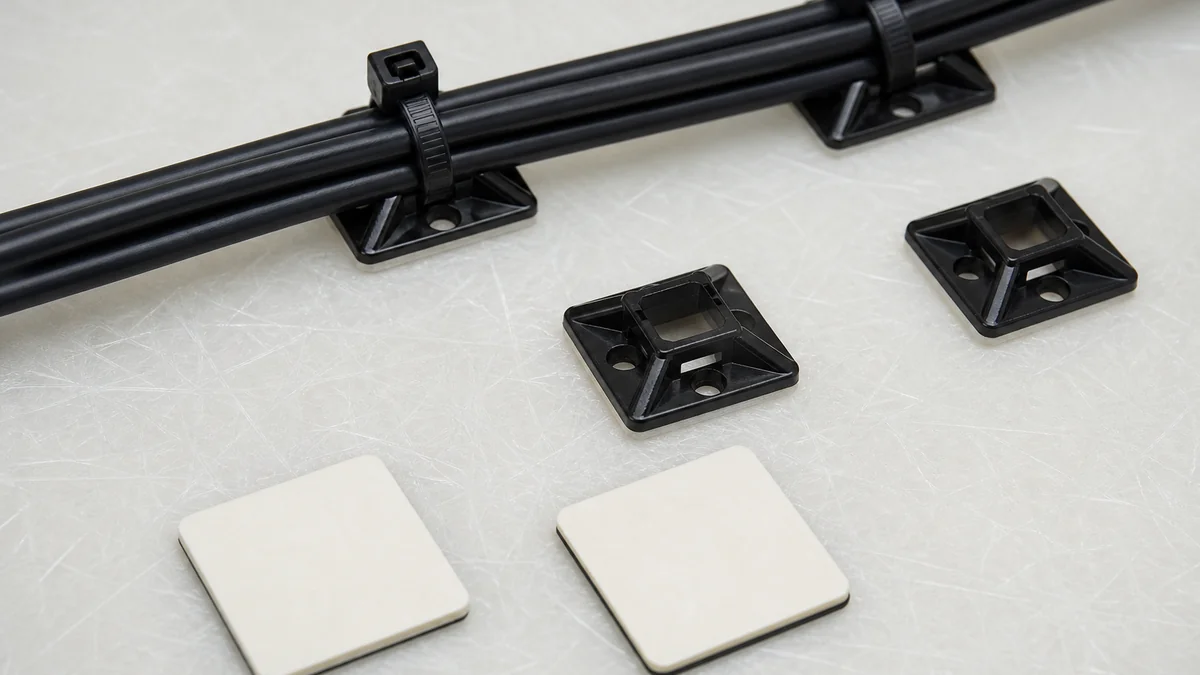
Cable Routing Mounts
Adhesive cable tie bases that route harnesses on hulls, decks and equipment without new holes.
Best sellers
Best Cable Tie Mounts
White nylon and aluminum adhesive bases for routing harnesses without drilling holes.
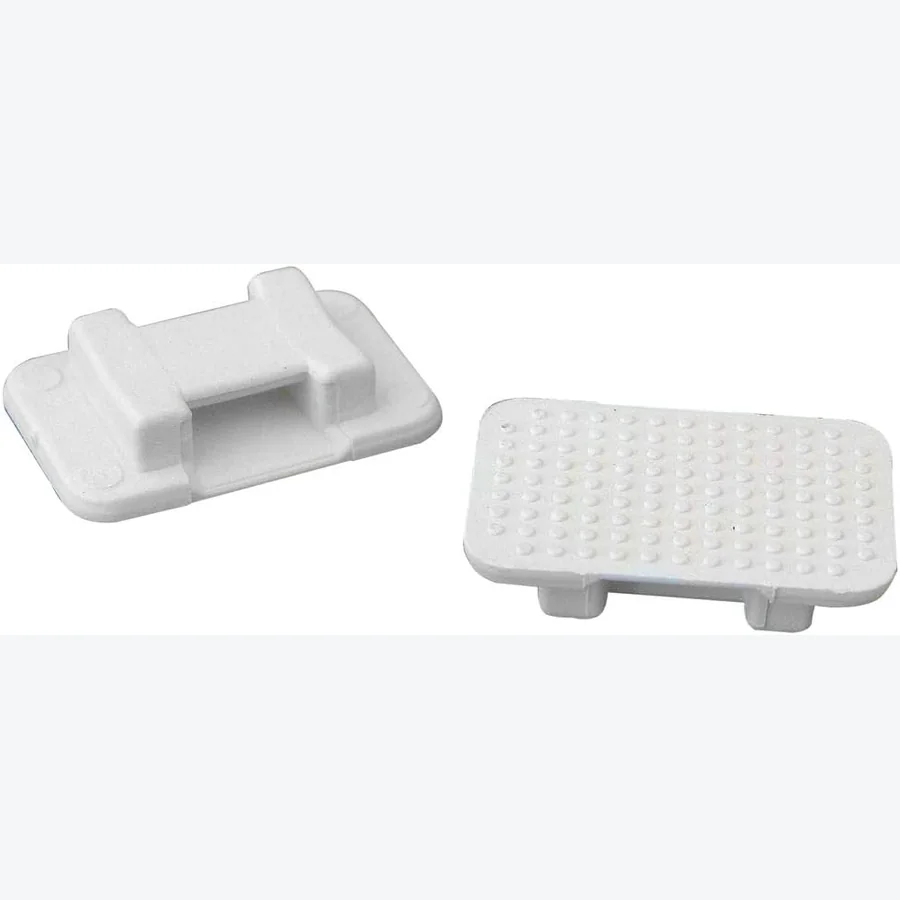
AT-5 Wire Tie Mount
Fifty large white nylon tie mounts rated for substantial pull on fiberglass and metal.
Check Price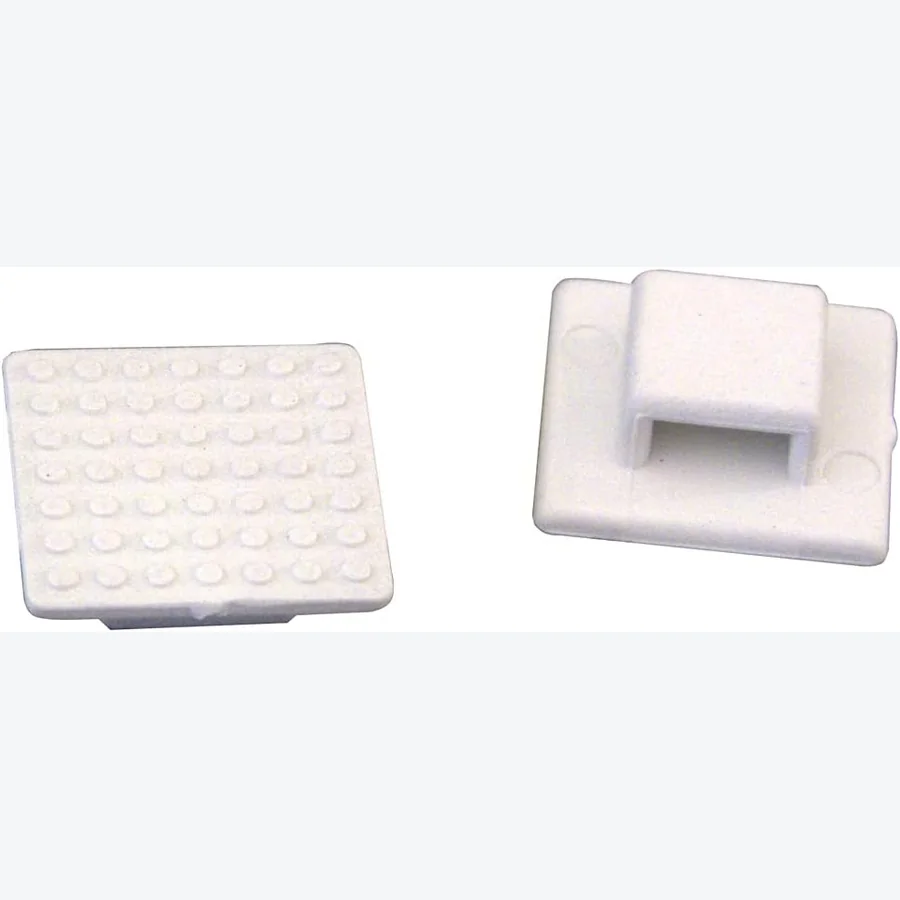
AT-3 Wire Tie Mount
Fifty compact tie mounts for lighter harness bundles in cabins and service bodies.
Check Price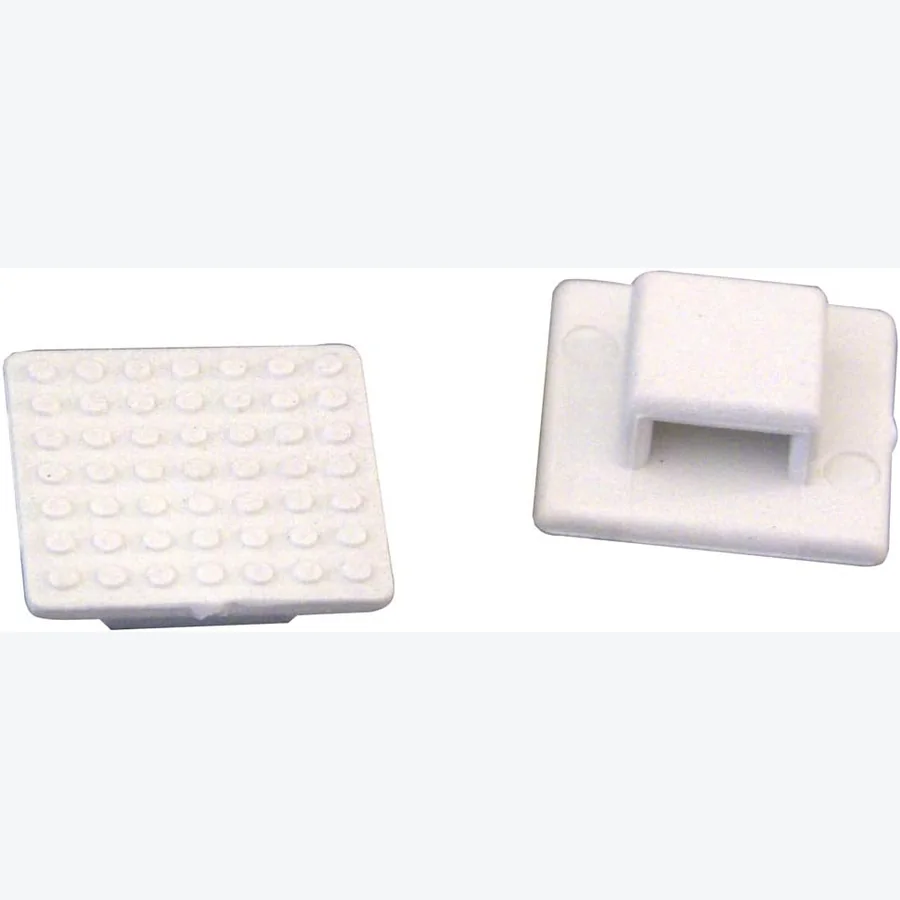
AT-3 Tie Mount 100-Pack
Hundred-count AT-3 mounts for production wire routing without drilling bulkheads.
Check Price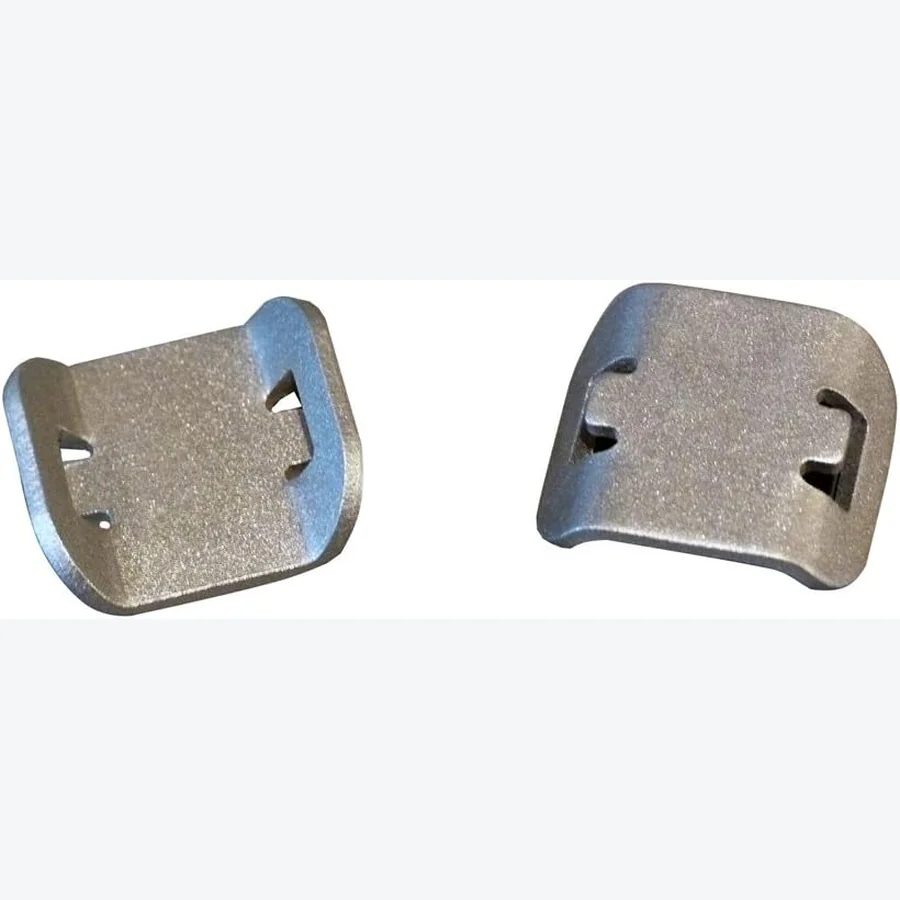
AT-9 Aluminum Mount
Twenty-five aluminum tie mounts for heat-exposed runs in engine compartments.
Check PriceProduct lineup
Cable mount lineup
Seven mount styles from flush cabin routing to UV-rated exterior runs.
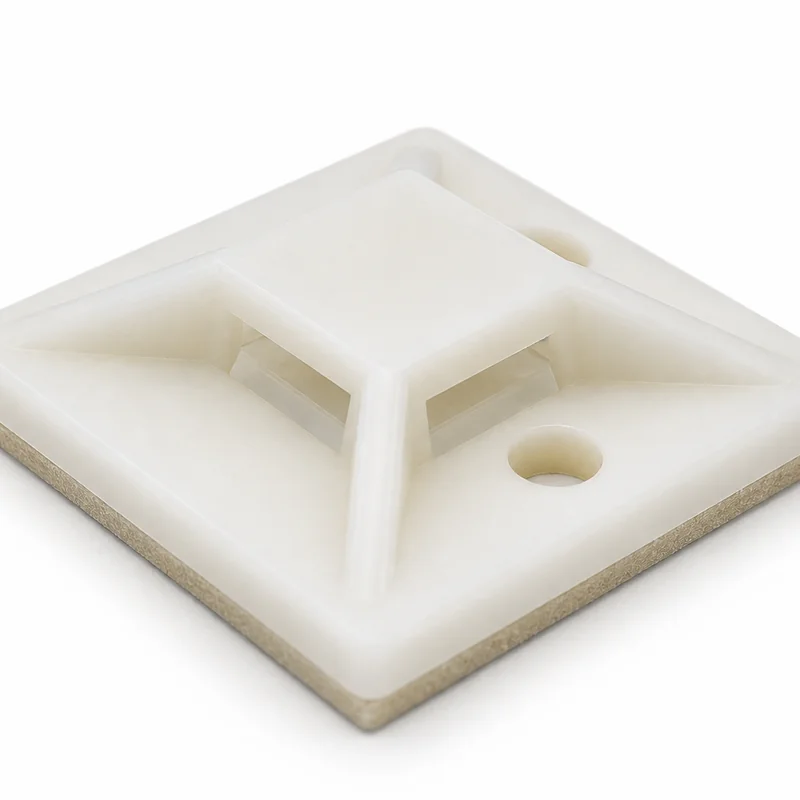
Flush Mount Base
Low-profile pad that sits beneath wire bundles on painted cabin surfaces.
View Details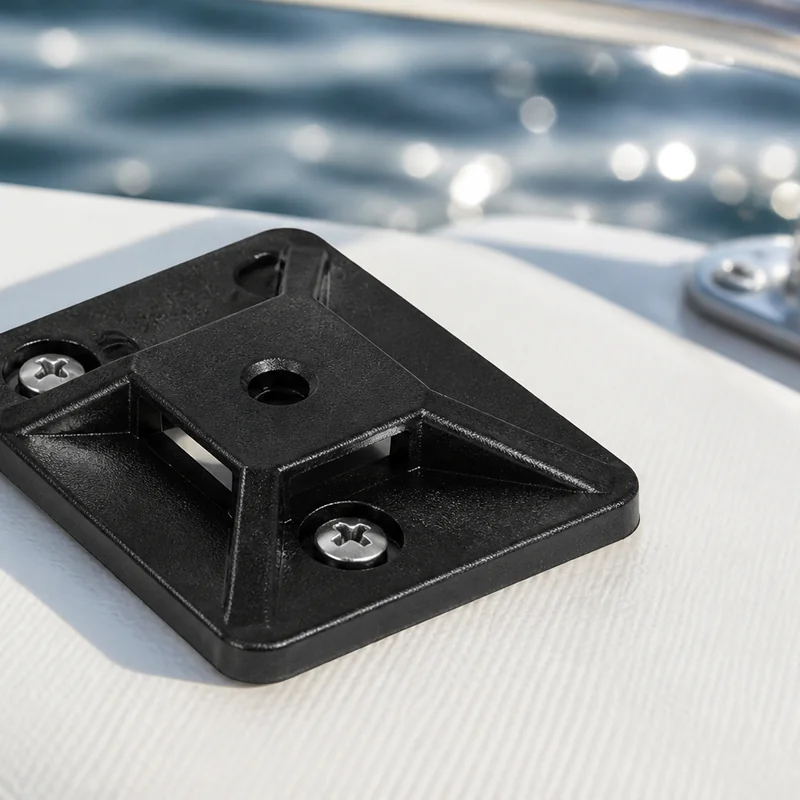
Heavy Duty Base
Wide bonding area for engine-room harnesses subject to heat and vibration.
View Details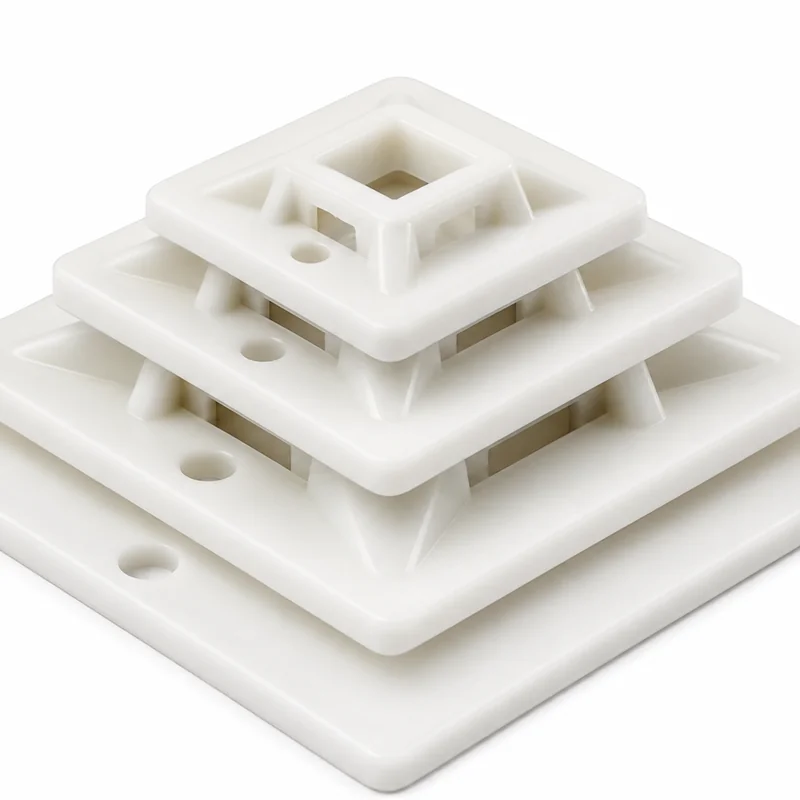
Stackable Base
Interlocking bases that build vertical stacks without drilling stacked holes.
View Details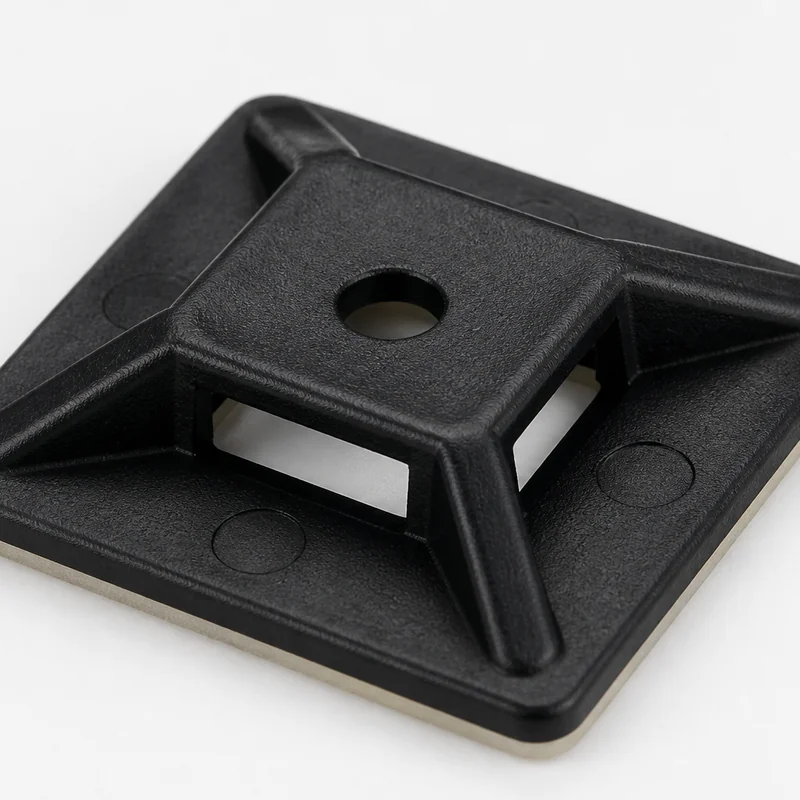
Angled Route Base
Preset angle keeps hoses and wiring away from sharp edges on bulkheads.
View Details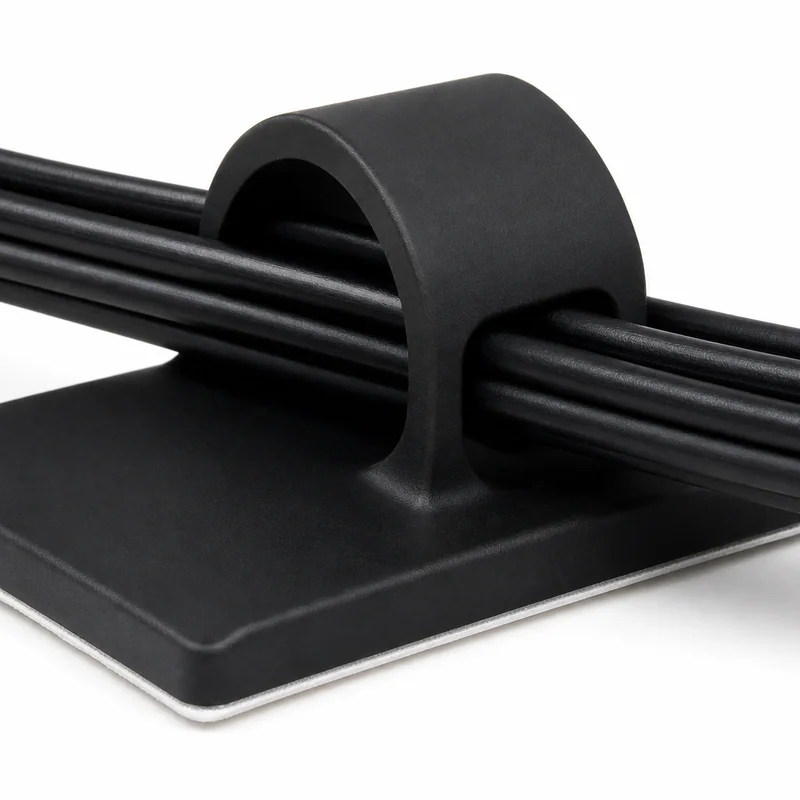
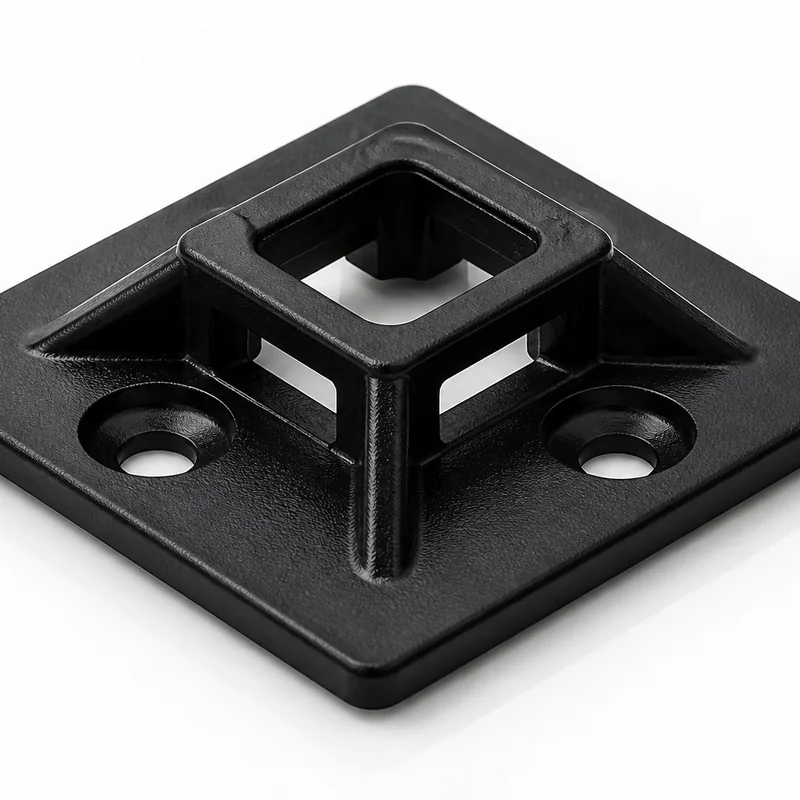
UV-Rated Mount
UV-stable pad and tie slot for exterior runs on boats and service vehicles.
View Details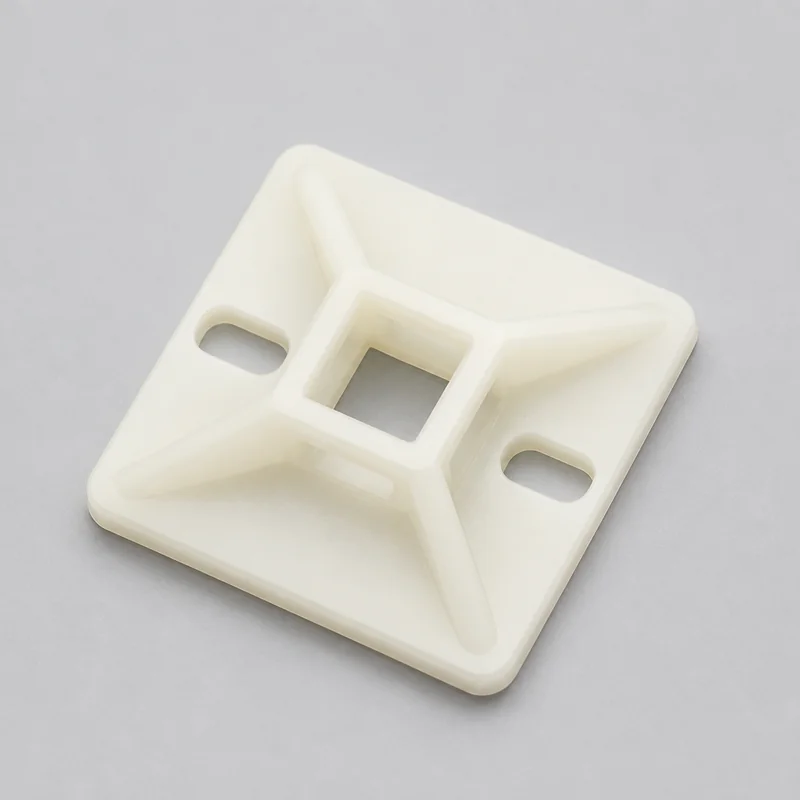
Standard Tie Base
Everyday mount for single-bundle routing in automotive and industrial panels.
View DetailsWhy adhesive routing
Drilled wire clips leak on hull interiors and weaken thin skins. Bonded bases spread load and keep watertight integrity on decks and headliners.
Adhesive routing also speeds retrofit when owners add electronics without yard time for interior tear-out.
Flush mount uses
Flush profiles preserve headroom and reduce snagging in cabins and lockers. Pair with small zip ties to avoid oversized bundles that lift pads in peel.
Ideal for LED runs, Ethernet and low-voltage harnesses that must disappear visually.
Heavy duty bases
Wider pads support engine-room bundles subject to heat, oil mist and vibration. Add ties at both ends of long runs to limit sway that fatigues adhesive in peel.
Route high-temperature wiring away from exhaust manifolds even when pads are rated—adhesive sees cumulative heat plus radiant load.
Stackable systems
Stackable bases interlock vertically on bulkheads where horizontal space is scarce. Build stacks before loading heavy harnesses to keep alignment true.
Do not exceed manufacturer stack height without engineering review—tall stacks multiply peel moment on upper pads.
Angled route bases
Preset angles keep hoses and cables away from sharp fiberglass edges and moving machinery. Plan direction before bonding; rotation after fixture risks voids.
Angled mounts shine on generator boxes and inverter compartments with tight corner radii.
Large pad options
Textured gelcoat and rough fiberglass need oversized footprints for uniform contact. Large pads forgive minor surface irregularities when prep is thorough.
Use large pads on exterior coamings where sanded surfaces remain slightly uneven.
UV-rated exterior mounts
UV-stable pads and tie slots resist chalking on flybridges and service-truck bodies. Still inspect fillets seasonally—sun plus flex demands proactive maintenance.
Pair UV mounts with stainless tie wraps in salt air to avoid rust streaking on white gelcoat.
Standard tie bases
Everyday single-bundle mounts suit automotive looms and control panels. Batch-install with a spacing template for uniform appearance on OEM-style builds.
Keep adhesive off tie slot so zip ties seat fully—wicked adhesive can bind ties before bundles are loaded.
Load planning
Heavy batteries and transformers need mechanical support beyond ties on adhesive pads alone. Treat mounts as organizers, not structural hangers, unless engineered.
Leave service loops at terminations so future swaps do not yank pads in peel.
Marine routing habits
Separate AC and DC runs even when mounts make it easy to bundle everything together. EMI and safety codes still apply without drill holes.
Document routes on as-built sketches stored near electrical panels for next owner service.
Automotive fleet tips
Fleet upfitters batch prep panels on benches before installing in vans. Warm panels bond more predictably than cold metal straight from morning delivery.
Use stackable mounts behind shelving uprights where vertical cable travel is long.
Maintenance inspections
Annual checks should tug ties gently near pad edges looking for lift or chalky fillets. Replace any mount showing edge creep before it propagates.
After major storms or trailering events, re-walk exterior routes on boats—vibration can loosen ties that sawtooth against pad edges.
Spare mount strategy
Stock a mixed bin of flush and heavy-duty bases so outage crews can reroute harnesses without waiting on specialty orders.
Photograph approved routing paths during commissioning—future techs replicate spacing instead of guessing pad locations under time pressure.
Marcus Brennan covers marine and industrial adhesive fastening for Weld Mount. This guide is editorial and independent.